1 / 2
01
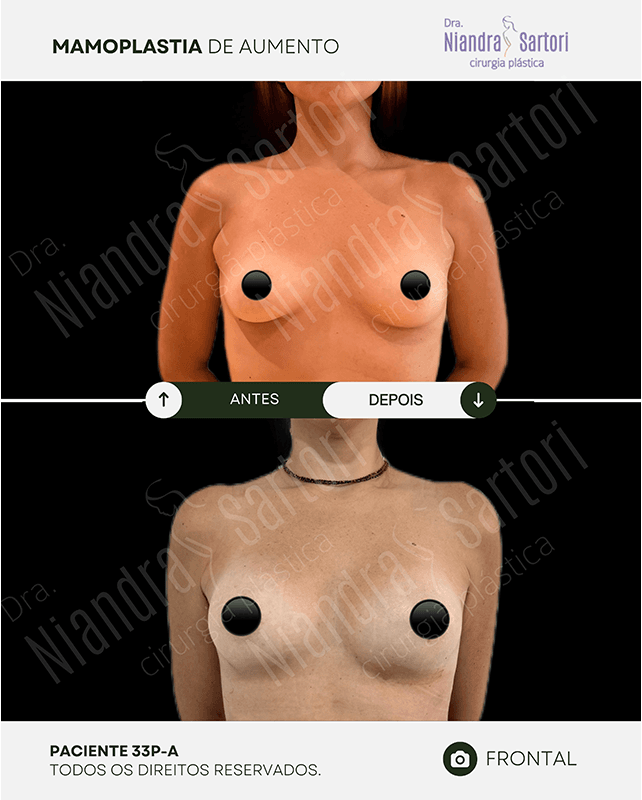
Breast augmentation
An increase in volume and improved breast contour, with an implant chosen from the patient's anatomy.
Results and real cases
Explore the galleries by body region and see how different procedures share a surgical plan.
Breast surgery treats shape, proportion and contour: increasing volume, repositioning tissue, correcting sagging, reducing weight, or removing an implant that no longer makes sense for you.
The decision doesn't start from a size picked out of a photo. It starts from the width of the breast base, the thickness and quality of the tissue, the position of the inframammary fold and the height of the areolar complex relative to it.
In practice: a breast lift repositions the breast and treats sagging; augmentation adds volume and projection; reduction removes weight and restores comfort; and implant removal takes the implant out, with or without a lift and fat grafting. Which one fits your case comes from the exam, not from a catalogue.
An increase in volume and improved breast contour, with an implant chosen from the patient's anatomy.
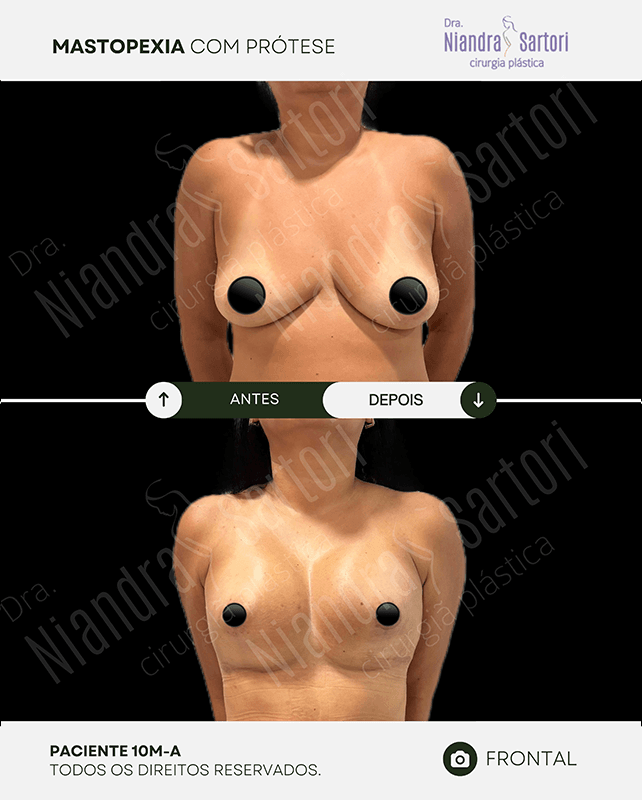
Repositions the breast and treats sagging by adding an implant, for more firmness, volume and projection.
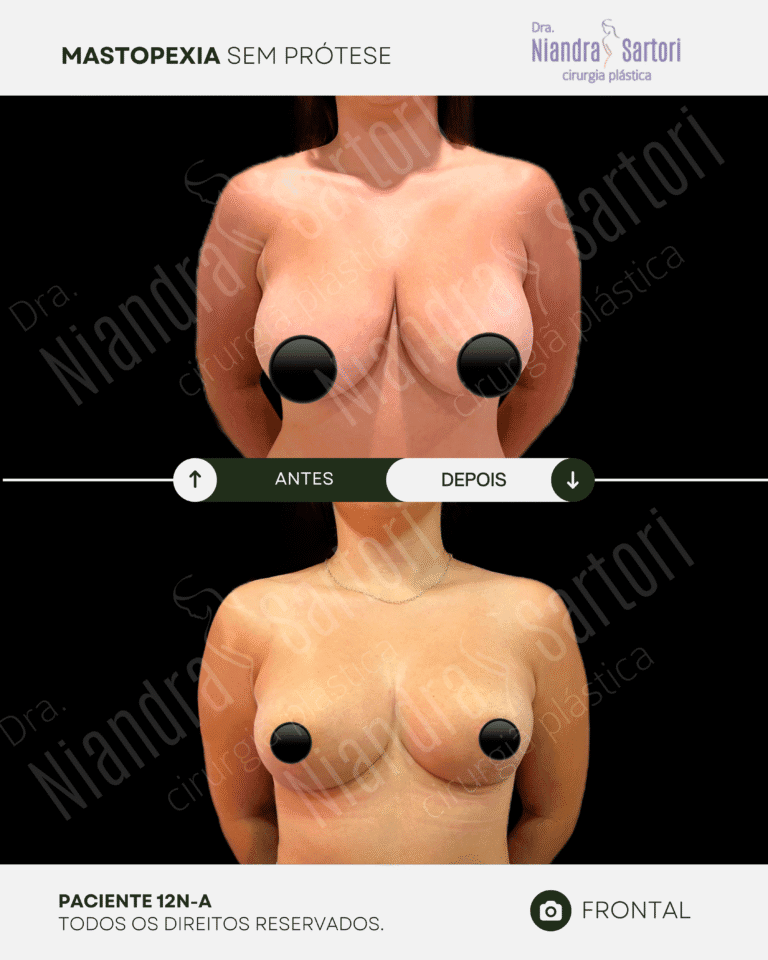
Repositions the breast tissues without increasing volume. It is indicated for those with breast sagging who do not wish to increase volume or achieve a marked cleavage with silicone implants.
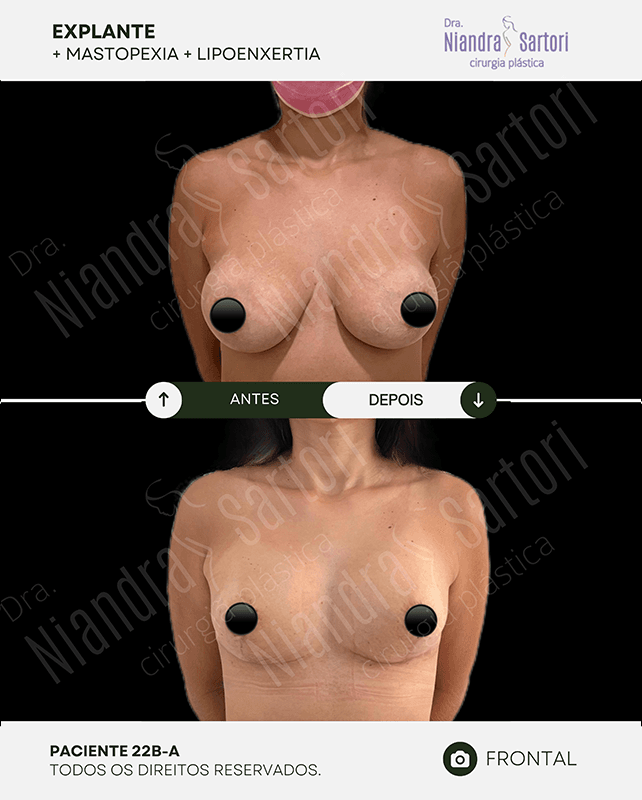
Removal of the implants combined with lifting the breast and restoring volume with the patient's own fat.
Resistant localized fat, in someone with good skin elasticity and a stable weight, is treated with liposuction. Excess skin, with or without separated abdominal muscles, is treated with a tummy tuck or mini tummy tuck.
Confusing these cases is the most common mistake: isolated liposuction in someone with excess skin tends to worsen sagging, because it removes the volume that was filling out the skin envelope without treating the skin itself.
In practice: liposuction treats localised fat; a tummy tuck removes excess skin and corrects diastasis; a mini tummy tuck handles more limited cases; and liposculpture redistributes your own fat to shape the contour. The right combination comes from the clinical exam.
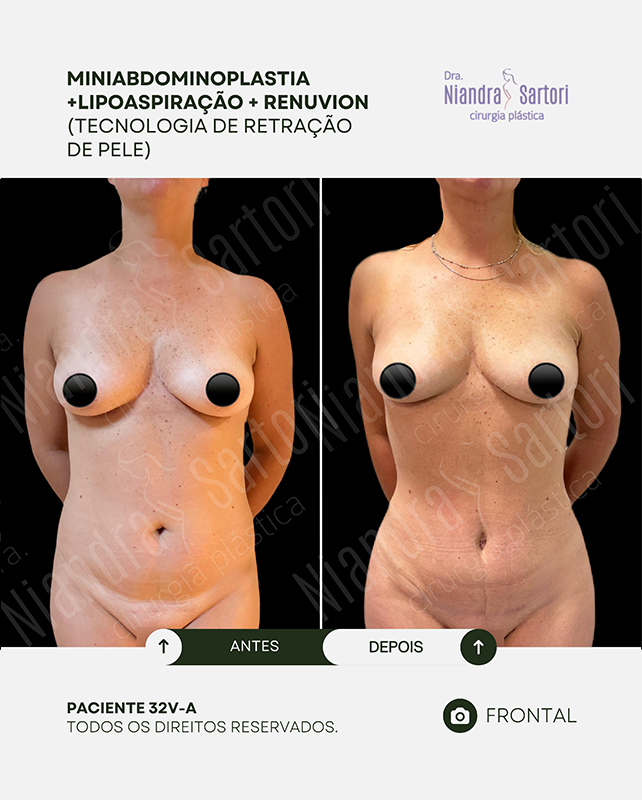
A mini tummy tuck is the surgery to correct diastasis and infraumbilical sagging, combined with removal of localized fat through liposuction and treatment of the skin and sagging with radiofrequency technology (Renuvion).
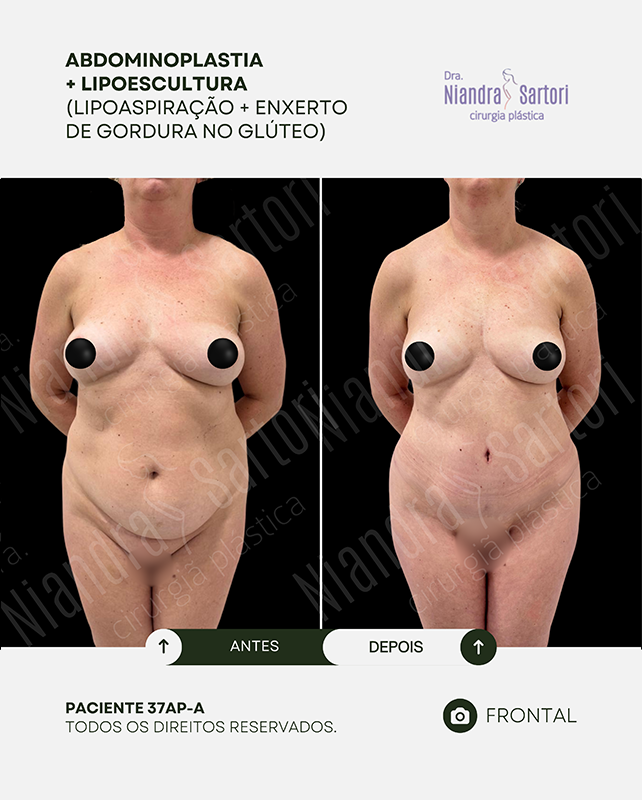
A tummy tuck is the surgery performed to correct diastasis of the rectus abdominis muscles and treat abdominal skin sagging in the supra- and infraumbilical regions. During the procedure, liposuction was also performed to remove localized fat, and the aspirated fat was then used as a graft in the gluteal region, aiming to increase volume, improve body contour and correct any irregularities and imperfections in the area.
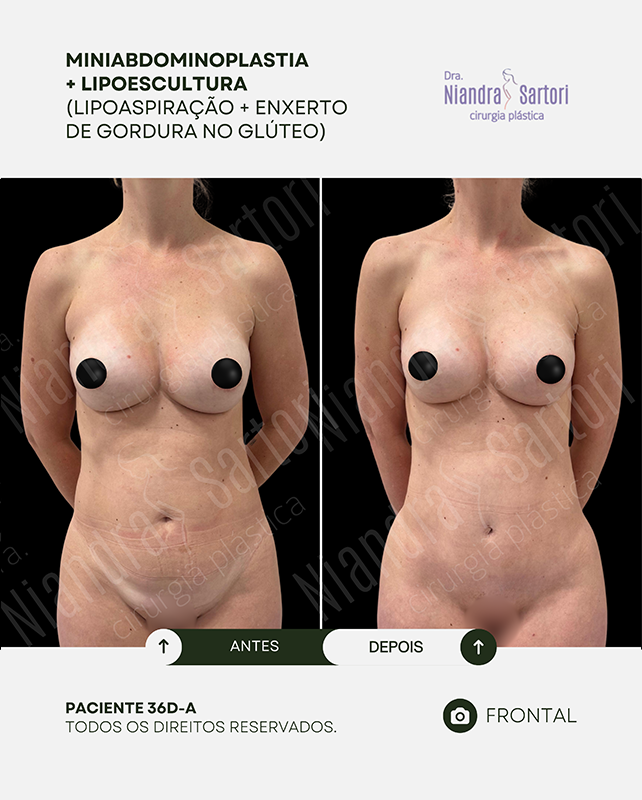
A mini tummy tuck is the surgery performed to correct diastasis of the rectus abdominis muscles and treat skin sagging in the infraumbilical region. Liposuction was also performed to remove localized fat, and the aspirated fat was then used as a graft in the gluteal region, aiming to increase volume, improve contour and treat any irregularities and imperfections in the area.
After pregnancy and breastfeeding, three problems often appear together and need to be addressed separately in the plan: loss of breast volume and sagging, excess abdominal skin, and separation of the rectus abdominis muscles, diastasis. Each requires a different correction.
The combination exists because treating everything in a single plan avoids two recoveries and a second period off. But it is only recommended when total surgical time stays within a safe anesthesia range, with exams in order and adequate clinical condition.
When the estimated time is high, when there is a comorbidity, or when a routine with young children can't accommodate a more intense recovery, the recommendation shifts to splitting into two shorter, more predictable surgical sessions.
It is not about going back to the body you had before. It is about a body that keeps up with your life today, and when and how to do that is your decision, made with a clinical exam in hand.
A stable weight and completed breastfeeding are prerequisites for planning; without them, the result changes over time.
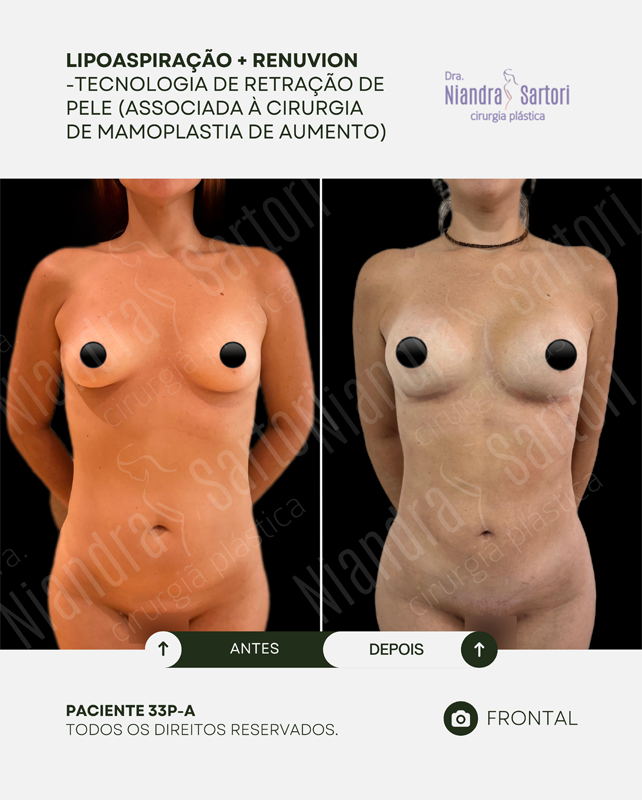
Removal of localized fat with radiofrequency skin retraction, performed together with breast augmentation.
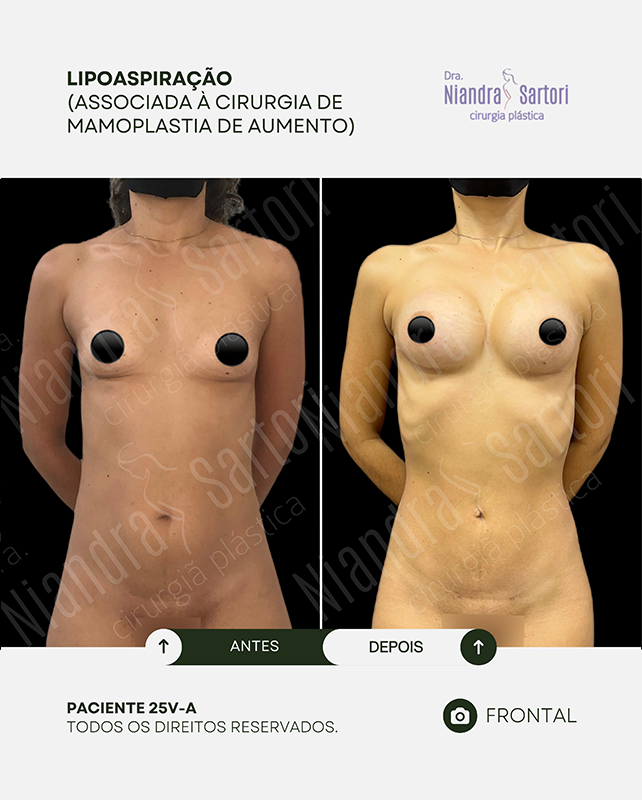
Reshaping of the abdomen, flanks and waist performed together with breast augmentation, for a proportional contour.
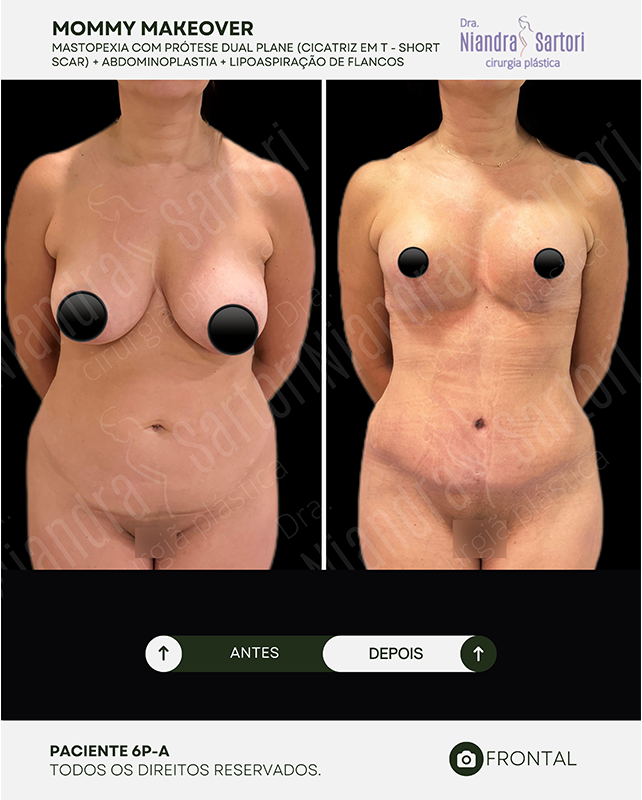
Mastopexy with implants corrects breast sagging and increases breast volume through silicone implants. With the reduced-scar technique, we achieve a result with a more delicate, scar-free décolletage. The tummy tuck corrects diastasis and abdominal sagging, and combining it with liposuction delivers a much more harmonious waist.
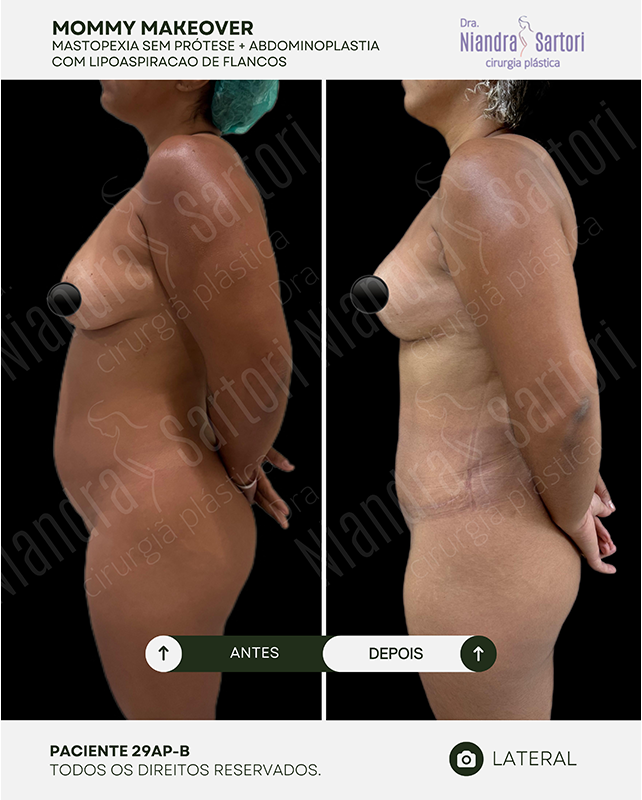
Mastopexy treats breast sagging without increasing volume, using the patient's own breast tissue to give the breast its new shape. Combining it with a tummy tuck seeks to correct abdominal sagging and diastasis, while localized fat in the flank region is reduced with liposuction.
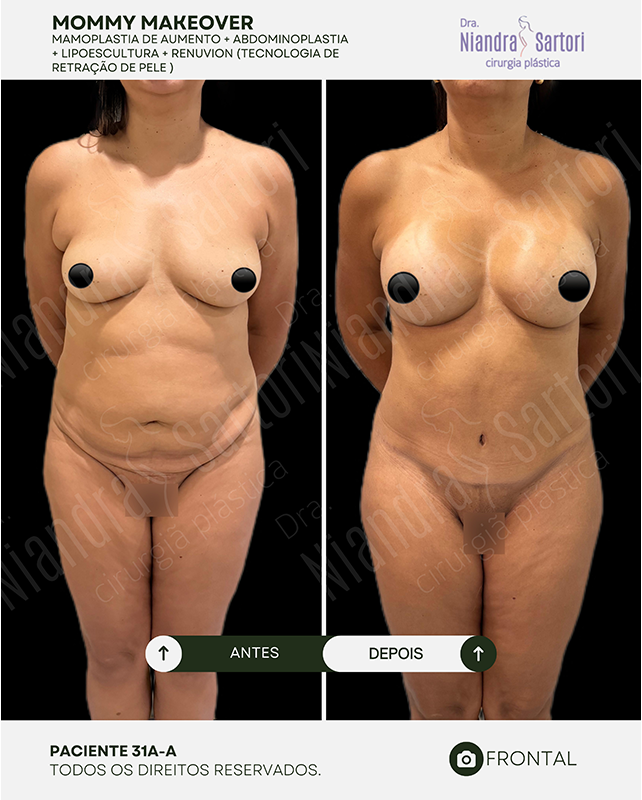
Breast augmentation combined with abdominal correction and radiofrequency skin retraction.
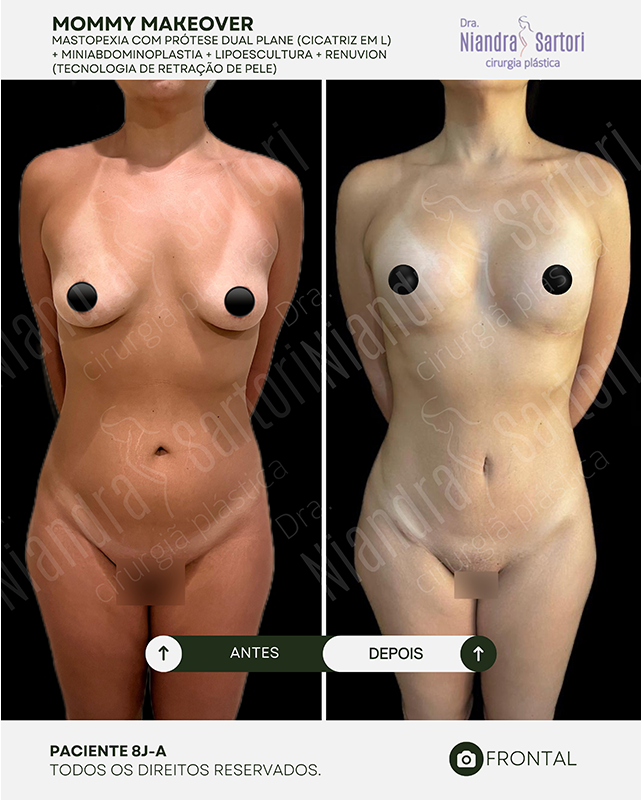
A discreet L-scar, combined with infraumbilical correction and radiofrequency skin retraction.
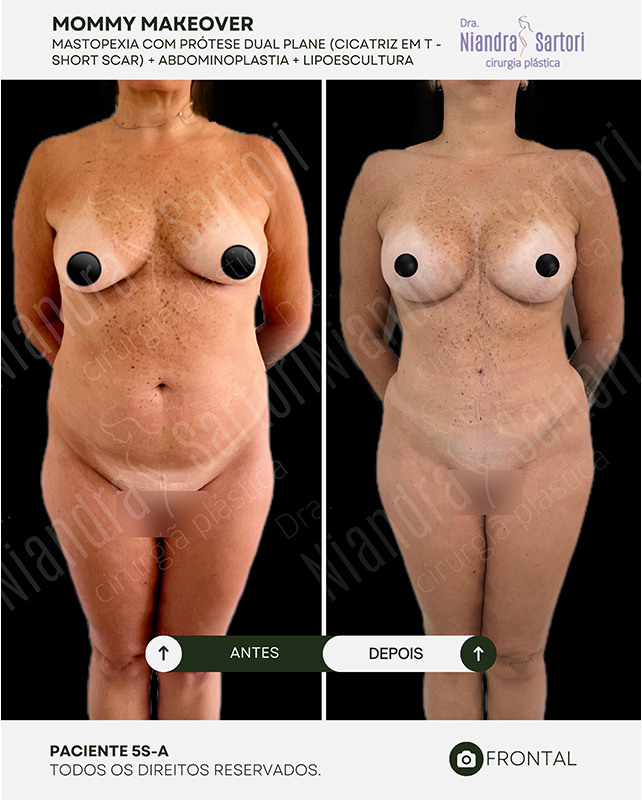
Lifts and adds volume to the breasts with a reduced scar, combined with abdominal correction and contour refinement.
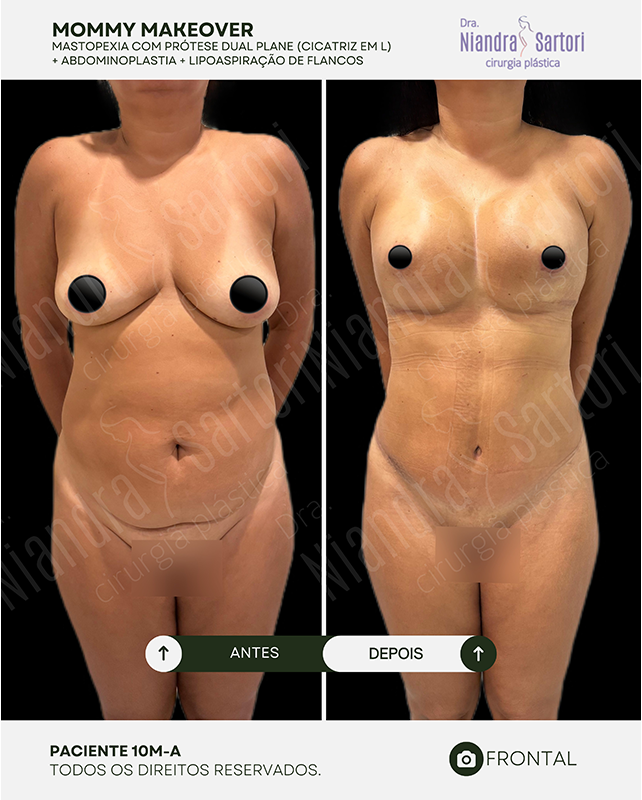
A discreet L-scar, combined with diastasis correction and flank reduction.
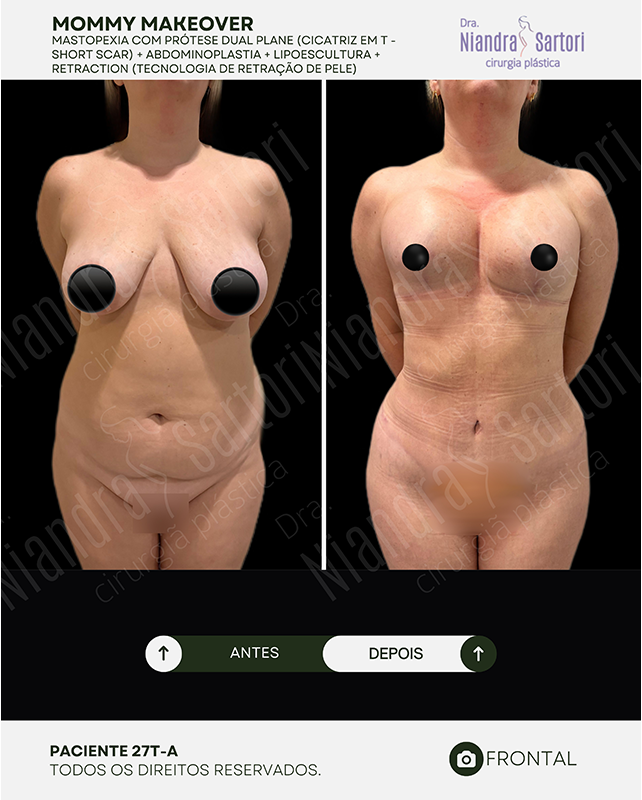
Lifts and adds volume to the breasts, combined with abdominal correction and internal radiofrequency skin-retraction technology.